

2026-08-14T04:51:43
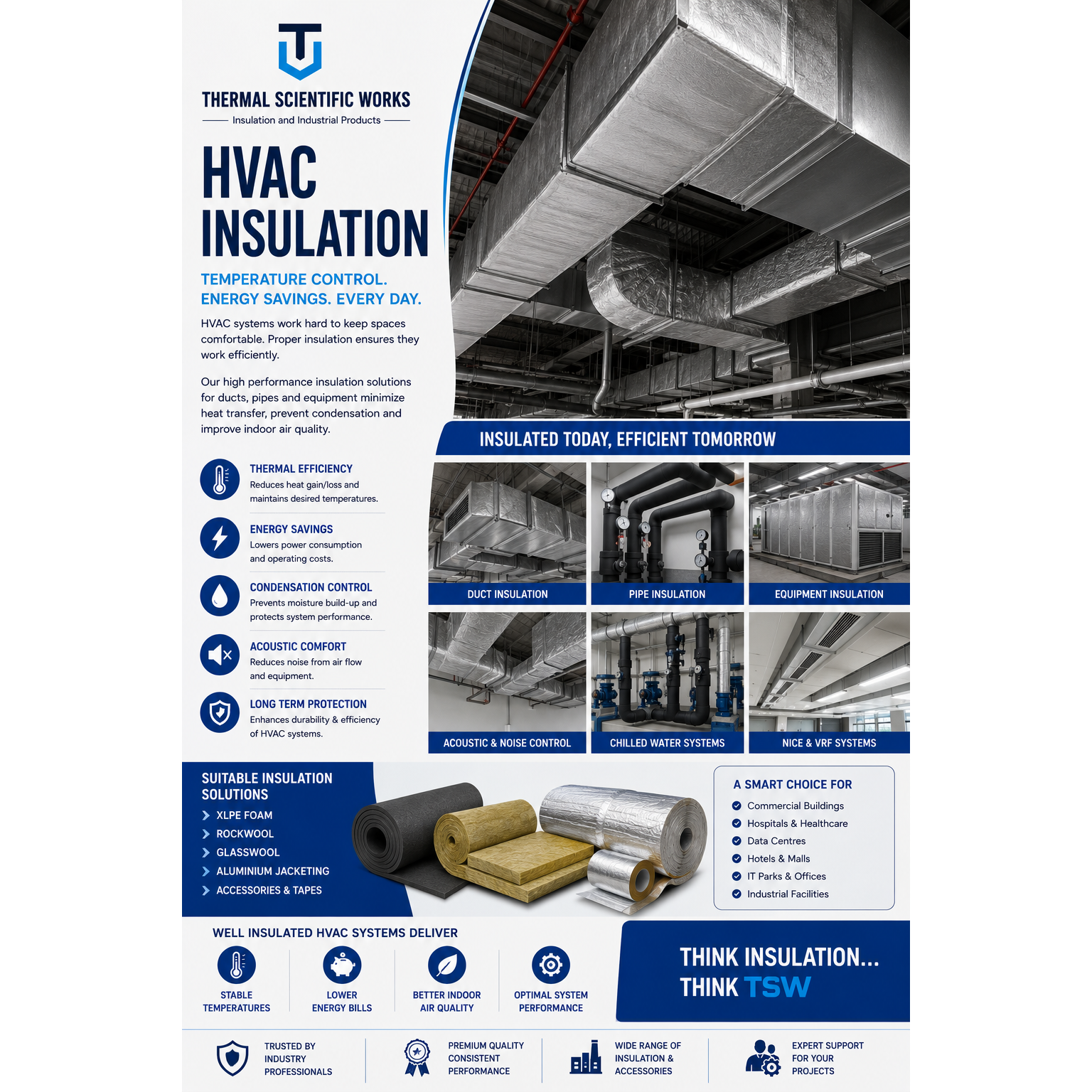
HVAC Insulation: Protecting Temperature, Energy Efficiency and Indoor Comfort Heating, ventilation and air-conditioning systems are responsible for maintaining comfortable and controlled indoor environments across offices, hospitals, hotels, factories, data centres, retail buildings and residential spaces. But an HVAC system can only perform efficiently when the conditioned air, chilled water and refrigerant systems are properly protected from unwanted heat transfer. HVAC insulation plays an important role by reducing heat gain or heat loss from ducts, pipes and equipment. It can also help control condensation, improve acoustic comfort and protect HVAC components from environmental conditions. For modern buildings, HVAC insulation should therefore be considered an essential part of the complete mechanical system rather than an optional finishing layer. Why HVAC Insulation Matters Air-conditioning systems are designed to deliver air at a controlled temperature. If an uninsulated duct passes through a hot ceiling space, heat from the surrounding environment can transfer into the conditioned air before it reaches the occupied area. Similarly, chilled-water pipes can absorb heat from the surrounding environment. This increases the cooling load on the system and can reduce overall efficiency. Proper insulation creates thermal resistance around the duct or pipe, helping maintain the intended operating temperature. The effectiveness of the system depends on insulation type, thickness, thermal conductivity, installation quality, ambient conditions and the operating temperature of the HVAC system.
Have a question? Ask here!
Required fields are marked *